
Barrier-based Risk and Incident Management relates to the application of the principles of modern incident / loss causation theory, predicated on the widely accepted and oft-cited Swiss Cheese Model. In essence, the model explains away incidents as being attributed to the failure of barriers (a collective term used to describe controls, safeguards and defenses) in performing their intended functions. Barrier-based Risk and Incident Management treats risk management and incident root cause analysis as being not only polar opposites in time, but inextricably linked in their application.
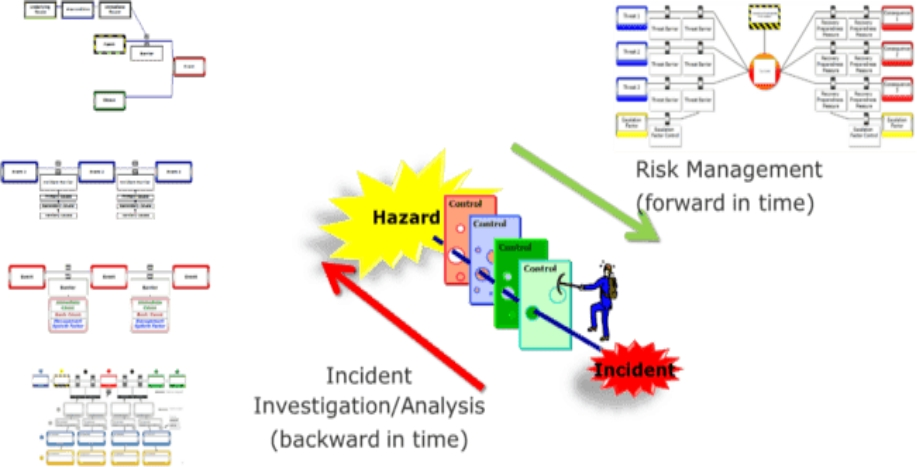
Barrier-based Risk Management involves applying the Bowtie tool, which faithfully captures the essence of the Swiss Cheese Model, to manage organizational risks. The Bowtie captures all plausible elements of a risk scenario (hazard, top event, threats and consequences) and, unlike traditional approaches to risk management, establishes their inter-relationships and subsequently maps out the risk trajectories. Visual risk management in one simple, easy-to-understand diagram.
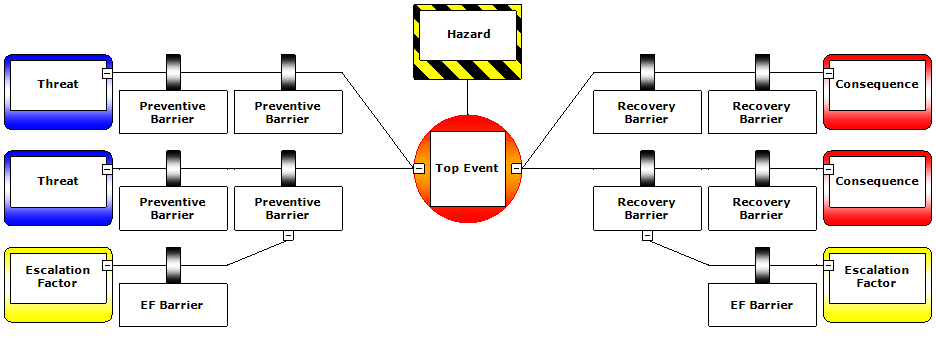
As with the Swiss Cheese Model, controls are never perfect. Unlike more simplistic approaches to risk management, the Bowtie technique enables us to manage our barriers so that they do not fail and subsequently cause incidents. Barrier management involves linking the barriers on the Bowties to specific elements of the management system (HSEQ + Asset Integrity) such as HSE-critical activities/tasks and their accountabilities/responsibilities, standards, policies and remedial actions to address any shortfalls.
The Bowtie technique enables risk-based decision making and efficient resource application, and; is a powerful tool for risk communication, awareness and organizational learning.
Where incidents do occur, the root causes of barrier failures need to be determined and, in this, there are available numbers of state-of-the-art tools (Tripod Beta and BFA, among others) which can assist us in achieving this objective.
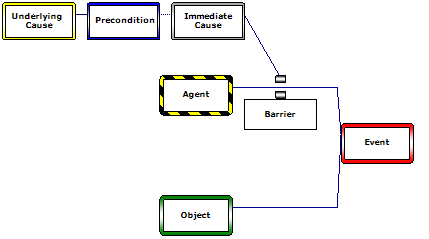
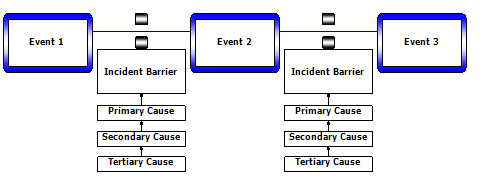
Barrier-based RCA tools make clear distinction between events, barriers/controls and causation paths. Their “What”, “How” and “Why” structures set them apart from classical RCA methodologies.
Quality management tools such as 5 Whys, SCAT, fishbone diagrams, RCA, etc. are commonly used for incident root cause analysis. These are not barrier-based and are therefore not aligned to modern understanding of incident/loss causation. Analysis of root causes using these classical tools tend to be performed on an incident in its entirety. Taking such a broad-based approach can lead to failed barriers being overlooked, thus resulting in missed opportunities to fix the barriers that are implemented for the purpose of stopping the incident.
Barrier-based risk and incident management is not confined to just performing risk management, per se, or undertaking incident investigation/analysis in isolation. Integrating risk and incident management enables learning from incidents and offers a holistic, proactive safety framework that focuses on the critical controls (barriers) preventing or mitigating hazards. Instead of measuring past incidents, it actively monitors the health, effectiveness, and reliability of these barriers—such as physical hardware, technology, or human procedures. Incident and barrier audit data are fed directly back into risk assessment models, assigning barrier effectiveness ratings and strengthening weaknesses over time in true continual improvement fashion.
OSH ProCare Consultant & Services offers Barrier-based Risk and Incident Management training across all sectors of industry. Clients are often conferred with to gain a full understanding of their training expectations. This initial engagement ensures the entire range of OSH ProCare Consultant & Services’ specialist capabilities are bespoken to each client’s training needs and business interests. The training courses emphasize common sense approaches, based on team workshops, case studies, and oftentimes novel methods. When a training program is completed, the “New Owners”, or Client, are encouraged to improve continuously, keeping training ‘evergreen’ and up to date.
Clients often informally request for ad-hoc assistance for further development and support, whether it be for “refreshers”, on designing, developing, and delivering tailored training solutions, or even on consultancy/advisory support. OSH ProCare Consultant & Services offers a total solution to ensure the success of their programs.
OSH ProCare Consultant & Services offers consultancy, facilitation, mentoring and/or advisory services to complement the courses, with the aim of supporting clients in developing adequate capacity and competence in performing Barrier-based Risk Management and Incident Analysis. The services may be used in an integrated mode, or selectively, to provide solutions to specific client needs. Consultancy is offered based on our consultants’ extensive experience of working with blue chip clients in high-risk sectors such as oil and gas, petrochemical, chemical processes, utilities, mass transportation (land, sea and air), infrastructure, construction / fabrication, manufacturing and logistics.
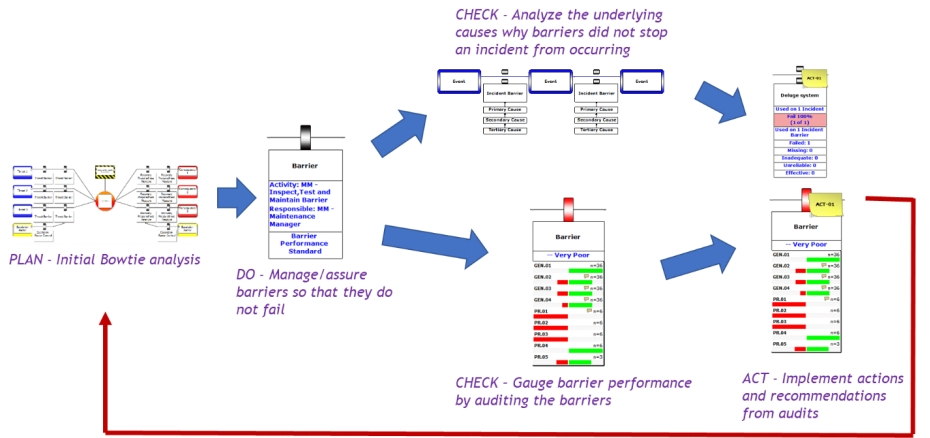
Effective barrier management is founded on the application of the PDCA continual improvement cycle to the barriers themselves. Realization of the barrier PDCA cycle is contingent upon the extensive usage of the industry-leading software tools BowTieXP, IncidentXP and BowTieXP Enterprise, enabling not only the development of Bowtie risk models, but also barriers audits, barrier-based incident root cause analyses and the availability of an appropriate web-based repository for large accumulations of data.
Senior Principal Consultant, HSE & Risk Management
Barrier-based Risk and Incident Management Facilitator/Trainer
E-mail: Faizal_FW@oshprocare.com.my
Faizal Farid Wajidi is an independent Senior Principal Consultant, with broad and diverse experience in HSE & Risk Management, Health Physics and nuclear applications, Petro-physics and Project Engineering/Management. He has more than 35 years of professional experience, mainly spent in the major hazard sector, with than 30 years in middle and senior management capacities in the companies where he has been employed.
In his 25 year sojourn in the HSE & Risk Management disciplines as a consultant, Faizal has flitted between HSE management, technical safety and risk management, in the process accumulating a vast and diverse volume of project experience in these areas including HSE management system implementation, environmental site assessment/due diligence, Corporate Responsibility workshops, Tripod Delta organizational condition survey, EIA, formal safety assessment (HSE Case) for offshore facilities, project and operational risk assessment, HEMP reviews and remedial actions and incident analysis training and facilitation.
Faizal is a subject matter expert in barrier-based risk and incident management. He is a qualified and experienced facilitator in software-based Bowtie, Tripod Beta, BSCAT and BFA analyses, as well as the application of the Tripod lite tool for low- to medium-risk incidents. His area of focus is in the integration of risk analysis (Bowties) with incident analysis (Tripod Beta, BSCAT and BFA) and barrier audits with the objective of closing of the barrier PDCA loop. He has delivered several HSE- and Enterprise Risk-related Bowtie and barrier-based incident analyses workshops and advisory support for safety regulators and for major companies in the oil and gas production, petrochemical, edible oils processing, highway management, infrastructure (electricity co-generation, district cooling, biomass, piped gas, water treatment, desalination), energy and utilities, engineering/fabrication, oil-well services, maritime and aviation/aerospace sectors in Malaysia, Indonesia and Singapore.
As well as being a HRDC-accredited trainer (Trainer ID: 47483), he is a pioneer and long-term partner of the Netherlands-based Wolters Kluwer Enablon, the developer of the industry-leading BowTieXP and IncidentXP software tools, spanning more than 20 years. He is the first Wolters Kluwer Enablon partner in SEA to be certified to Advanced Practitioner level for the BowTieXP and Practitioner level for the IncidentXP.
Faizal previously was in the employment of Shell, Schlumberger, ICI Physics and Radioisotope Services Group, Risktec and DNV. He graduated from the University of Reading, United Kingdom, with a BSc (Hon) degree in Mechanical Engineering and Mathematics.